Understanding RPM and Horsepower in Ribbon Screw Blender Operations
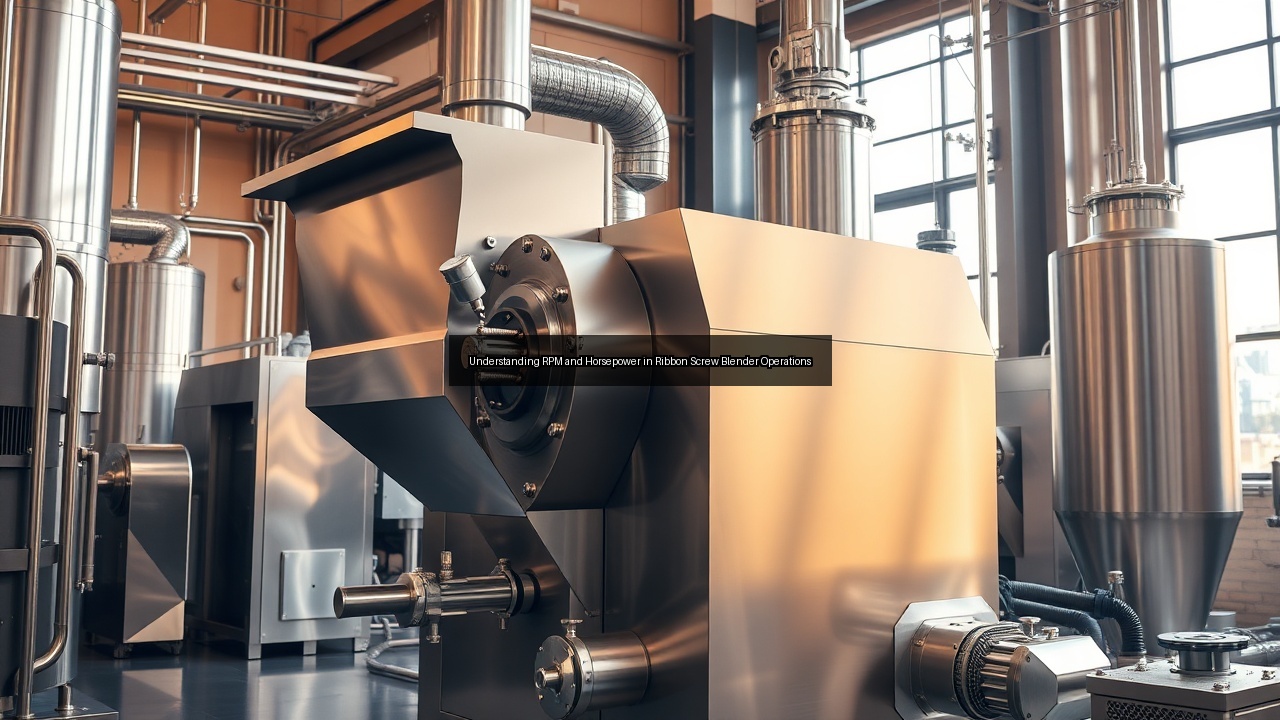
Introduction to Ribbon Screw Blenders
Overview of Ribbon Screw Blenders
Ribbon screw blenders combine inner and outer helical screws inside a U-shaped trough to move materials in opposing directions. This counterflow action breaks up clumps and distributes powders evenly across batches. Operators load ingredients through top ports or bag dump stations, then activate the central shaft that drives the ribbon screws. American manufacturers often equip these units with variable speed drives so crews can match rotation rates to specific recipes. The design handles free-flowing granules as well as denser compounds without creating dead zones. Maintenance crews access the trough through end doors for quick inspection of the screws and seals. Ribbon screw blenders therefore serve as reliable workhorses in plants that process bulk solids daily.
Importance of Industrial Mixing in Various Industries
Industrial mixing ensures consistent product quality from one batch to the next. In food plants, uniform distribution of seasonings prevents off-flavors and meets strict labeling rules. Chemical producers rely on the same equipment to blend catalysts without generating heat that could trigger unwanted reactions. Pharmaceutical lines use ribbon screw blenders to achieve content uniformity that satisfies regulatory audits. Construction material suppliers mix pigments into cement powders to deliver predictable colors on job sites. Proper mixing also reduces waste because operators avoid over-processing or repeated passes. When plants select the right blender screw configuration, they shorten cycle times and increase throughput without sacrificing blend integrity.
Understanding RPM in Ribbon Screw Blender Operations
Definition of RPM and Its Significance
RPM measures shaft revolutions per minute and directly controls how fast the ribbon screws circulate material inside the trough. Higher RPM values create stronger convective currents that lift and fold powders repeatedly. Lower settings produce gentler motion suited to fragile particles that could fracture under aggressive shear. Engineers calibrate RPM against bulk density and particle size so the blender reaches homogeneity before the material overheats or segregates. Variable frequency drives let operators store preset RPM profiles for different products, reducing setup errors across shifts. Accurate RPM control also extends equipment life because motors avoid overload during startup. Plants that monitor RPM trends catch bearing wear early and schedule service before unplanned downtime occurs.
How RPM Affects Mixing Efficiency
Mixing efficiency rises when RPM matches the flow characteristics of the batch. At optimal speeds, the outer ribbon pushes material toward the discharge while the inner screw returns it, creating continuous recirculation. Too low an RPM leaves stagnant pockets near the trough walls where powders remain unmixed. Excessive RPM generates centrifugal force that throws particles against the sides and reduces contact time between components. Tests show most dry blends reach uniformity between 20 and 40 RPM, though cohesive materials may require brief high-speed pulses to break lumps. Operators record blend times at each RPM setting and refine parameters for future runs. Consistent efficiency lowers energy use and keeps downstream packaging lines supplied without interruption.
Adjusting RPM for Different Materials and Powders
Adjustment begins with a review of material data sheets that list particle size, moisture, and flow index. Free-flowing salt or sugar blends tolerate higher RPM without degradation. Fine talc or flour demands slower speeds to prevent dusting and maintain containment. When switching from light to heavy powders, crews raise RPM gradually while monitoring motor amperage to stay within safe limits. Seasonal humidity changes sometimes require RPM tweaks because moisture alters cohesion and flow. Automated controls store recipes that include ramp-up sequences, hold times, and cooldown periods. Documented adjustments create repeatable results and simplify training for new operators. Proper RPM management therefore protects both product quality and equipment longevity across diverse powder types.
Horsepower: The Power Behind the Blender
Understanding Horsepower and Its Measurement
Horsepower quantifies the motor output needed to turn the ribbon screws against the resistance of the loaded trough. Manufacturers rate motors in brake horsepower, which accounts for mechanical losses in the drive train. Operators read nameplate data and compare it against actual load during startup when torque demand peaks. Inline sensors display real-time horsepower draw so crews can verify the motor operates within its service factor. Over time, horsepower recordings reveal trends such as increased friction from worn seals or product buildup. Accurate measurement prevents nuisance trips and supports predictive maintenance schedules. Plants that track horsepower against batch weight establish baselines that flag deviations before they become costly failures.
Factors Influencing Horsepower in Ribbon Blenders
Product bulk density exerts the largest influence because heavier powders increase torque on the screws. Fill level also matters; an overfilled trough raises resistance dramatically. Material characteristics such as particle shape and moisture content change internal friction and therefore horsepower requirements. Ribbon design plays a role too; wider flights or tighter clearances demand more power. Ambient temperature affects lubricant viscosity in the gear reducer and indirectly alters horsepower draw. American standards recommend sizing motors with at least 20 percent margin above calculated peak load to handle occasional overloads. Operators who understand these factors select the correct motor and drive combination from the start, avoiding costly retrofits later.
Calculating the Required Horsepower for Specific Applications
Calculation starts with batch weight and bulk density to determine the mass inside the trough. Engineers apply empirical factors that account for material flowability and desired cycle time. The formula multiplies mass by a constant derived from test data, then divides by efficiency ratings of the drive components. Software tools from equipment suppliers refine the estimate by incorporating ribbon diameter and trough length. Validation occurs during factory acceptance tests where technicians measure actual horsepower at full load. Plants keep these calculations in equipment files so future capacity expansions reference proven baselines. Accurate sizing ensures reliable operation and prevents both underpowered stalls and oversized motors that waste electricity.
Construction and Materials of Ribbon Screw Blenders
Common Materials Used: 304 Stainless Steel vs. Other Alloys
304 stainless steel resists corrosion from mildly acidic or salty powders and meets sanitary standards in food and pharmaceutical plants. Its smooth surface finish reduces product adhesion and simplifies cleaning between batches. Carbon steel offers lower cost for abrasive minerals where corrosion poses little risk. Higher alloys such as 316 stainless provide extra protection against chlorides when processing certain chemicals. Fabricators weld all contact surfaces continuously to eliminate crevices that could harbor contaminants. Surface treatments like electropolishing further enhance cleanability on 304 stainless steel units. Material choice therefore balances corrosion resistance, cleanability, and budget constraints for each application.
Design Features of Ribbon Blenders: Troughs and Rotary Valves
The U-shaped trough contains the ribbon screws and channels material flow efficiently toward the discharge. End plates support the shaft bearings and allow easy access for inspection. Many units mount a rotary valve directly under the discharge to meter blended powder into downstream equipment without flooding. The valve rotor maintains a consistent seal that prevents leakage during mixing. Optional high-speed choppers mounted through the trough lid break up stubborn agglomerates before they reach the screws. Sight glasses and access ports let operators verify blend progress without opening the entire lid. These integrated features reduce manual handling and improve containment around dusty powders.
Durability and Maintenance Considerations
Regular inspection of ribbon screws detects wear on the outer edge that reduces mixing effectiveness. Seal replacement intervals depend on product abrasiveness and operating hours. Gear reducers require oil analysis to catch metal particles before catastrophic failure. Trough liners extend service life when processing highly abrasive materials. American suppliers stock common wear parts for quick turnaround during scheduled shutdowns. Operators log maintenance events against batch records to correlate wear rates with specific products. Proactive care keeps ribbon screw blenders running at design capacity and protects the capital investment over decades of service.
Applications and Benefits of Ribbon Screw Blenders
Industries That Utilize Ribbon Screw Blenders
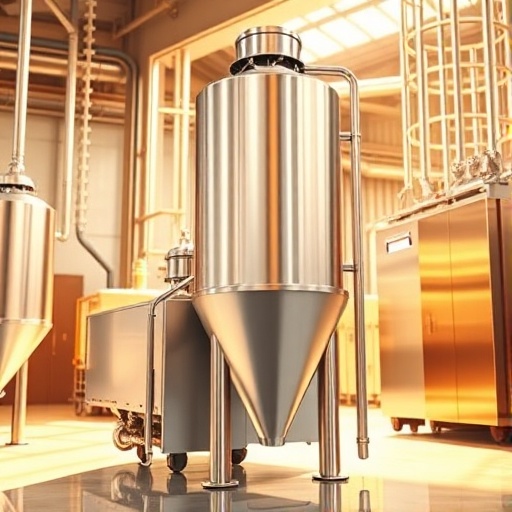
Food processors blend spices, nutritional powders, and baking mixes in ribbon screw blenders sized from laboratory units to 10,000-liter production models. Chemical companies prepare detergent formulations and pigment masterbatches with the same equipment. Agricultural firms mix fertilizers and seed treatments that demand uniform distribution of active ingredients. Construction suppliers produce dry mortar and grout blends that flow consistently on job sites. Pharmaceutical manufacturers rely on contained models for potent compounds that require validated cleanability. Each sector values the blender's ability to handle both small development runs and full-scale production without major reconfiguration.
Advantages of Using Ribbon Blenders for Dry Mixing
Ribbon blenders achieve high uniformity in short cycle times because the opposing screw action continuously exchanges material from top to bottom. The gentle folding motion minimizes heat generation and preserves particle integrity. Low energy consumption per kilogram processed keeps operating costs competitive. Easy access through the trough lid speeds changeovers and reduces downtime between products. The design accommodates bag dump stations and integrated dust collection so operators maintain clean work areas. When plants standardize on ribbon screw blenders, they simplify spare parts inventory and operator training across multiple lines.
Comparing Ribbon Blenders with Other Types of Mixers
Paddle mixers deliver faster blending for some cohesive materials yet create more shear that can damage fragile granules. V-blenders provide excellent uniformity for free-flowing powders but require longer discharge times and cannot handle sticky ingredients as readily. High-shear mixers excel at incorporating liquids yet consume significantly more horsepower. Ribbon screw blenders occupy a middle ground that favors dry blending applications where gentle yet thorough mixing matters most. Their straightforward construction also translates to lower maintenance complexity compared with fluidized bed or conical screw alternatives. Plants evaluate these trade-offs against product characteristics and throughput targets before selecting the optimal mixer type.
See Also
- Exploring the Benefits of Stainless Steel in Ribbon Screw Blenders
- Maximize Efficiency with High-Performance Ribbon Screw Mixers
- Comparing Ribbon Blenders and Traditional Mixers for Industrial Use
- Unlocking the Power of Ribbon Screw Blenders for Industrial Mixing Success
- The Future of Mixing Technology with Advanced Ribbon Screw Blender Designs